Polly Plummer
The Last BattlePolly Plummer, called Aunt Polly by the younger Friends of Narnia despite not being Eustace Scrubb’s actual aunt, is among the first humans to enter Narnia. Known there as Lady Polly, she bridges the world’s beginning and its end: she came on the First Day with Digory Kirke, later helped gather the Friends of Narnia, and is present when the old world closes and the company enters Aslan’s country.
Identity and First Journey
Polly is Miss Plummer, not Eustace’s aunt by relation; “Aunt Polly” is the name the children use for her. Her history in Narnia reaches back to its creation. Eustace explains to Tirian that Polly and Digory were the two who came into Narnia at the very beginning, on the day the animals learned to talk. Tirian recognizes the importance of this account: he understands that the pair are the Lord Digory and Lady Polly, visitors from the dawn of the world, and marvels that they remain alive in the children’s world.
Polly’s status as one of Narnia’s earliest visitors is confirmed again when Peter introduces her to Tirian as the lady who came into Narnia on the First Day, when Aslan made the trees grow and the Beasts talk. Her identity is therefore bound not merely to an old adventure, but to the formative moment when Narnia’s natural world and its speaking inhabitants came into being.
Gathering the Friends of Narnia
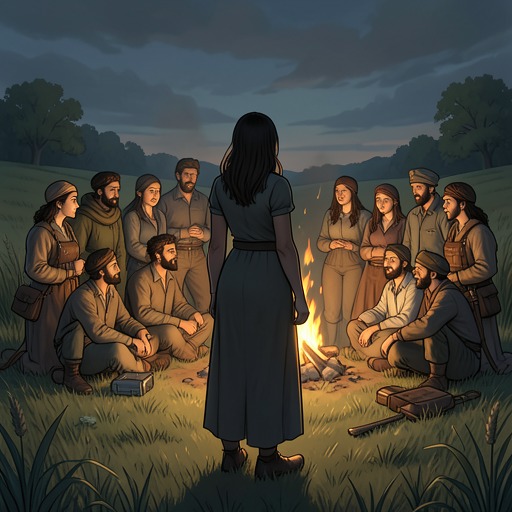
In England, Polly and Digory help bring the Friends of Narnia together. The gathering has two purposes: the friends meet for the pleasure of talking about Narnia, since they have no one else with whom they can share those experiences, and because Digory senses that they may be needed there. Their meeting becomes consequential after Tirian appears to them like a ghost and vanishes without explanation. His unexplained arrival persuades the group that something is happening in Narnia and that they must find a way back.
The Friends conclude that the Magic Rings are the means of returning. Those Rings had brought Polly and Digory to Narnia long before, when both were children; by this point they have been buried in the garden of a London house that has since been sold. Peter Pevensie and Edmund go to retrieve them, entering the garden from the back early in the morning disguised as workmen. After Peter sends a wire to say he has obtained the Rings, the plan is for him and Edmund to meet Eustace and Jill Pole as they travel to school and hand them over. Polly, Digory, and Lucy accompany the two younger children on the train because the group wants to stay together as long as possible.
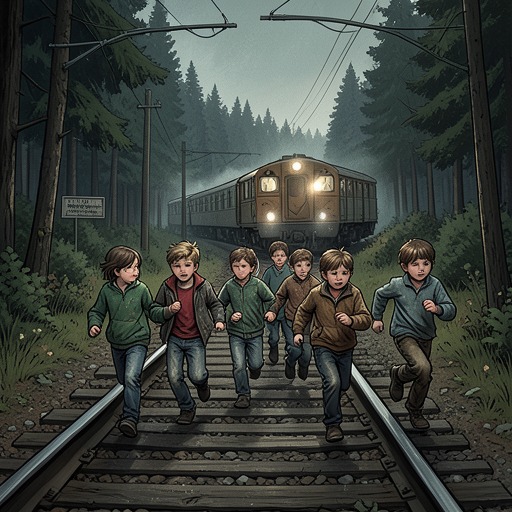
Polly’s return is thus part of a collective response rather than a journey she undertakes alone. The older friends cannot themselves enter Narnia again through the intended plan, so Eustace and Jill are to carry the Rings; the rest accompany them until the meeting. Before that exchange can take place, a violent jolt and noise interrupt the train journey, and the travelers find themselves in Narnia beside Tirian, who is tied to a tree.
Return and Renewal
The transition from the railway carriage into Narnia is also a transition in Polly’s sense of age. Digory says that he and Polly chiefly felt they had been “unstiffened” and had stopped feeling old. Jill observes that, in Narnia, the two do not seem much older than the younger travelers. Polly’s reply preserves both sides of the change: they may not appear older there, but they have been old. Her return restores not just access to Narnia but a youthfulness associated with entering its renewed reality.
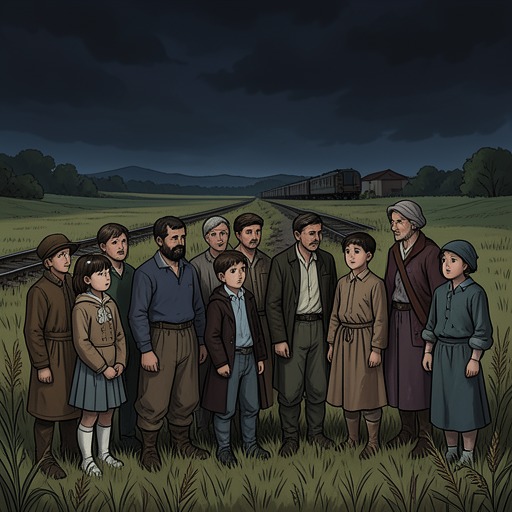
When the company gathers in Aslan’s country, Polly is identified publicly as the Lady Polly who was present on Narnia’s First Day. This recognition sets her earlier experience against the final events now unfolding. Digory and Polly have seen a dying sun in another world, and, as the sun rises over the waters at Narnia’s ending, they recognize that this sun too is dying. Their shared past gives them knowledge unavailable to the others: the enormous, dark-red sun and the surrounding devastation are not ordinary changes in the landscape but signs of a world reaching its end.
Witness to the End and Beginning
Polly is present as Aslan calls the stars home, the creatures are judged at the Door, and Narnia’s old world is brought to its end. The stars appear in the emptied sky as people, and the creatures who meet Aslan either turn away or enter through the Door. Polly belongs to the company that witnesses this separation and the arrival of the faithful creatures they had thought dead. She then remains with the others as rising water covers the old world and Aslan commands, “Now make an end.”
After the company passes beyond Narnia into the Western Wild, Polly and Digory recognize the country from their first journey. Tirian asks whether the stories are true—that they travelled there on the day the world was made—and Digory confirms it, saying it seems to him like yesterday. Polly’s presence makes this recognition more than a recollection: the same traveler who entered at the beginning is there again after the old Narnia has ended.
Aslan finally explains that the railway accident was real and that Polly, Digory, and the others are dead in the world they called the Shadow-Lands. The news reframes the journey from England as the passage into a lasting reality rather than a temporary return to Narnia. Polly’s story closes not with a return to her former life, but with the company beginning what Aslan calls the Great Story. Her place at both thresholds gives her a distinctive narrative role: she is a witness to Narnia’s creation and its ending, and a participant in the beginning beyond that ending.